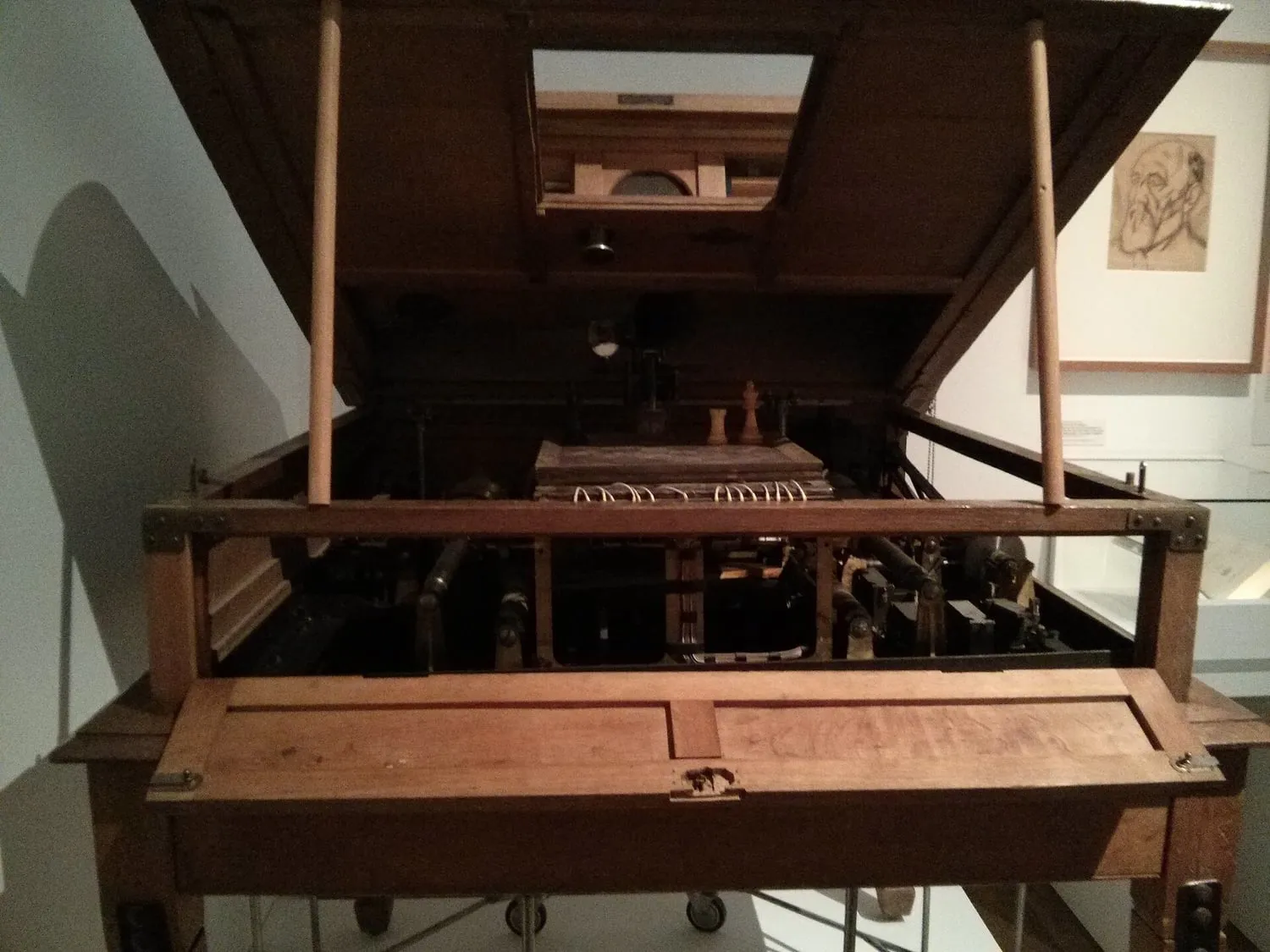
Around 1912 the Spanish engineer Leonardo Torres Quevedo built a machine he called El Ajedrecista, “the chess player.” It was not a hoax in the manner of the eighteenth century Mechanical Turk, which hid a human operator inside a cabinet. El Ajedrecista was a genuine automaton: an electromechanical device that, with no person guiding its moves, played out the chess endgame of king and rook against a lone king and drove the opposing king to checkmate.
The machine handled the full logic of the endgame itself. It used electrical sensors under the board to detect where the human opponent had moved the lone king, applied built-in rules to choose its own reply, and moved its rook and king by mechanism to make progress toward mate, regardless of the starting position. This made it, by common account, the first machine that could play a game and make its own decisions about how to win, rather than merely calculate or display a fixed result.
The earliest English-language account of the device is an article titled “Torres and His Remarkable Automatic Devices,” published in the Scientific American Supplement, volume 80, number 2079, dated 6 November 1915, pages 296 to 298. That contemporaneous report, written while Torres Quevedo’s machines were being demonstrated, is the primary source recorded here. The full original article has been verified directly: a public-domain scan of Scientific American Supplement volume 80 is available in full view from the HathiTrust Digital Library, and its pages 296 to 298 carry the article, including the photograph captioned “Automatic chess player,” the running discussion of how the machine plays the king-and-rook endgame, and the subtitle theme that Torres “would substitute machinery for the human mind.” A contemporaneous journal account of a demonstrated machine is about as close to a primary source as this period allows.
El Ajedrecista stands as an early, concrete answer to the question the Mechanical Turk had only pretended to answer: a machine really could be built to play a game by following rules on its own. It is a small precursor to the long line of game-playing systems, from the checkers and chess programs of the mid twentieth century through Deep Blue, that would use games as the proving ground for machine intelligence.