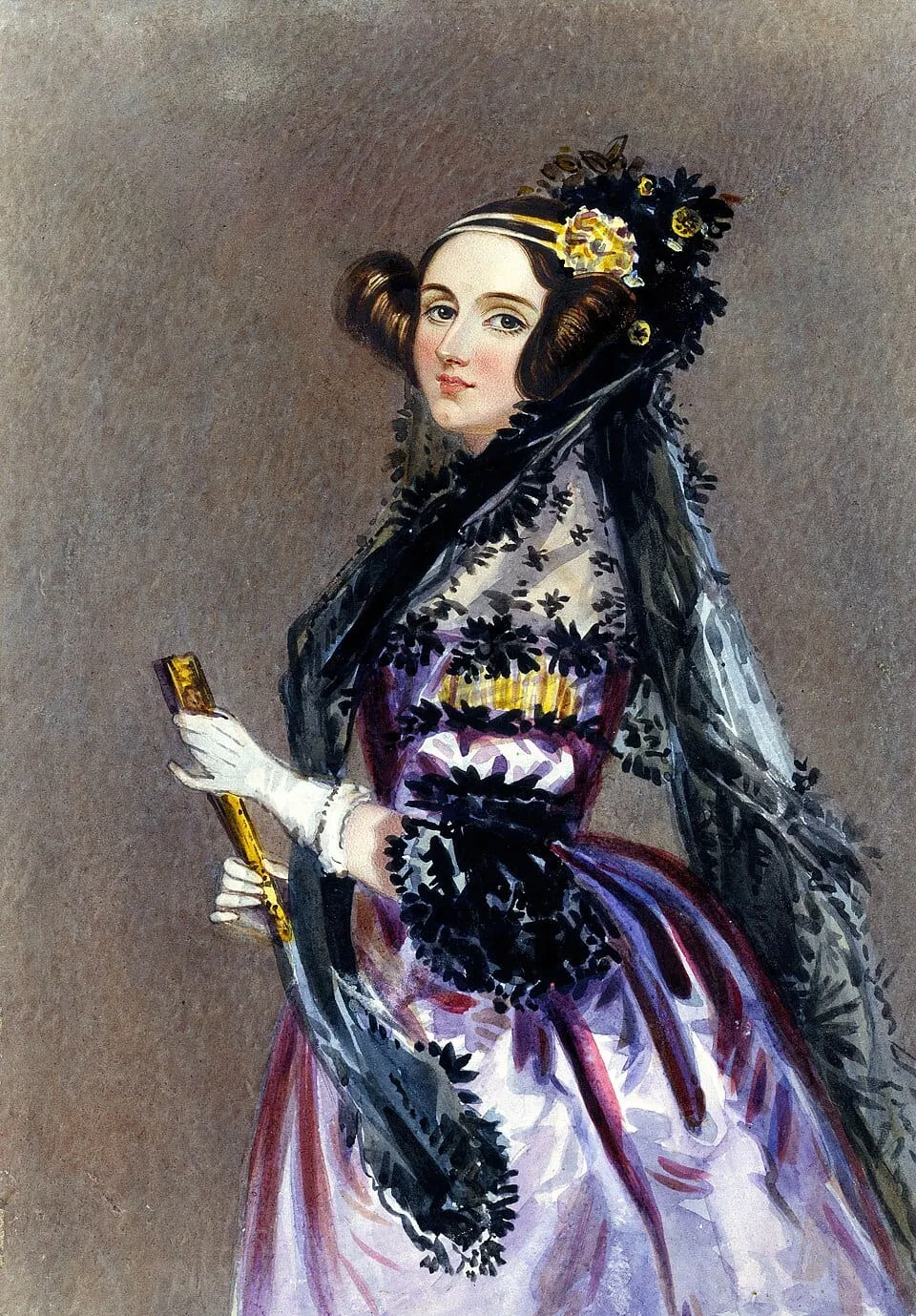
In 1843 Ada Lovelace published an English translation of an 1842 French memoir by the Italian engineer Luigi Menabrea describing Charles Babbage’s proposed Analytical Engine. The translation appeared in Richard Taylor’s “Scientific Memoirs” (volume 3). To it Lovelace appended a long set of her own Notes, labelled A through G, which ran to roughly three times the length of the original article and contained most of the ideas the work is remembered for.
Note G includes a step by step description of how the Analytical Engine could compute the Bernoulli numbers. Laid out as a table of operations, it is widely regarded as the first published example of an algorithm written for a machine, which is why Lovelace is often called the first programmer. The Notes also drew a distinction between merely calculating with numbers and operating on general symbols, anticipating the idea that such an engine could manipulate things other than quantities.
The same Note G contains the passage that later became central to debates about machine intelligence. Lovelace wrote that “The Analytical Engine has no pretensions whatever to originate anything. It can do whatever we know how to order it to perform.” She added that the engine could “follow analysis; but it has no power of anticipating any analytical relations or truths.”
More than a century later Alan Turing addressed this passage directly, calling it “Lady Lovelace’s Objection,” and argued that a machine might still surprise its programmer. The claim and the counter-claim frame a question that runs through the whole history of artificial intelligence: whether a machine can do anything genuinely new, or only what it was instructed to do. The full text used here is the transcription of the 1843 publication hosted at fourmilab.ch.